
Sabtu, 31 Maret 2012
Tokyo Disneyland Hotel
 The Tokyo Disneyland Hotel is the third Disney-brand hotel of the Tokyo Disney Resort. Also, it is the fourth Disneyland Hotel. It is located directly in front of the Tokyo Disneyland park with the Tokyo Disneyland station of the Disney Resort Line monorail system in between. The hotel was designed to reflect early 20th century Victorian architectural style, and to blend seamlessly with the World Bazaar area of Tokyo Disneyland, the monorail station and the main entrance area.
The hotel opened on July 8, 2008, and offers 700 guestrooms along with dining and shopping facilities.
Insidents at Tokyo Disneyland
Parades :
On January 8, 2008, a portion of a parade float collapsed during a presentation of the park's "Disney Dreams On Parade." A steel pillar, estimated to weigh 660 pounds, fell from the Buzz Lightyear float not far from park visitors. No performers or visitors were injured in the collapse. The park canceled its parades for the first time in its history in order to complete safety checks.
Space Mountain :
On December 5, 2003, a roller coaster train derailed as it was returning to the station. No riders were injured, and the ride was closed pending an investigation. A January 2004 investigation completed by Oriental Land Company, the park's owner/operator, determined that an axle on the train had failed because its diameter was smaller than the specifications for the part required. The attraction re-opened in February 2004, after 17 park officials were reprimanded for the accident.
The Tokyo Disneyland Hotel is the third Disney-brand hotel of the Tokyo Disney Resort. Also, it is the fourth Disneyland Hotel. It is located directly in front of the Tokyo Disneyland park with the Tokyo Disneyland station of the Disney Resort Line monorail system in between. The hotel was designed to reflect early 20th century Victorian architectural style, and to blend seamlessly with the World Bazaar area of Tokyo Disneyland, the monorail station and the main entrance area.
The hotel opened on July 8, 2008, and offers 700 guestrooms along with dining and shopping facilities.
Insidents at Tokyo Disneyland
Parades :
On January 8, 2008, a portion of a parade float collapsed during a presentation of the park's "Disney Dreams On Parade." A steel pillar, estimated to weigh 660 pounds, fell from the Buzz Lightyear float not far from park visitors. No performers or visitors were injured in the collapse. The park canceled its parades for the first time in its history in order to complete safety checks.
Space Mountain :
On December 5, 2003, a roller coaster train derailed as it was returning to the station. No riders were injured, and the ride was closed pending an investigation. A January 2004 investigation completed by Oriental Land Company, the park's owner/operator, determined that an axle on the train had failed because its diameter was smaller than the specifications for the part required. The attraction re-opened in February 2004, after 17 park officials were reprimanded for the accident.

Sabtu, 24 Maret 2012
1990s transition: Park becomes Resort
Disney California Adventure Park
In the late 1990s, work began to expand on the one-park, one-hotel property. Disneyland Park, the Disneyland Hotel and the site of the original parking lot as well as acquired surrounding properties were earmarked to become part of a greater vacation resort development. The new components of this resort were to be another theme park, Disney California Adventure Park; a shopping, dining and entertainment complex, Downtown Disney; a remodeled Disneyland Hotel; Disney's Grand Californian Hotel & Spa; and the acquisition of the Pan Pacific Hotel (later to be remodeled and renamed Disney's Paradise Pier Hotel). Because the existing parking lot (south of Disneyland) was built upon by these projects, the six-level, 10,250-space Mickey and Friends parking structure was constructed in the northwest corner of the property. At the time of its completion in 2000, it was the largest parking structure in the United States.[17]
Downtown Disney
The park's management team during the mid-1990s was a source of controversy among Disneyland fans and employees. In an effort to boost profits, various changes began by then-executives Cynthia Harriss and Paul Pressler. While their actions provided a short-term increase in shareholder returns, they drew widespread criticism from employees and guests alike for the lack of foresight. With the retail background of Harriss and Pressler, Disneyland's focus gradually shifted from attractions to merchandising. Outside consultants McKinsey & Company were also brought in to help streamline operations, which resulted in many changes and cutbacks. After nearly a decade of deferred maintenance, Walt Disney's original theme park was showing visible signs of neglect. Fans of the park decried the perceived decline in customer value and park quality and rallied for the dismissal of the management team.
Disneyland in the 21st century
Plaque at the entrance

Matt Ouimet, formerly the president of the Disney Cruise Line, was promoted to assume leadership of the Disneyland Resort in late 2003. Shortly afterward, he selected Greg Emmer as Senior Vice President of Operations. Emmer is a long-time Disney cast member who had worked at Disneyland in his youth prior to moving to Florida and held multiple executive leadership positions at the Walt Disney World Resort. Ouimet quickly set about reversing certain trends, especially with regards to cosmetic maintenance and a return to the original infrastructure maintenance schedule, in hopes of restoring the safety record of the past. Much like Walt Disney himself, Ouimet and Emmer could often be seen walking the park during business hours with members of their respective staff. They wore cast member name badges, stood in line for attractions and welcomed comments from guests.
In July 2006, Matt Ouimet announced that he would be leaving The Walt Disney Company to become president of Starwood Hotels & Resorts Worldwide. Soon after this announcement, Ed Grier, executive managing director of Walt Disney Attractions Japan, was named president of the Disneyland Resort. Greg Emmer retired from his job on February 8, 2008. In October 2009, Ed Grier announced his retirement, and was replaced by George Kalogridis as the new President of the Disneyland Resort.
50th Anniversary
Main article: Happiest Homecoming on Earth
The "Happiest Homecoming on Earth" was an eighteen-month-long celebration (held through 2005 and 2006) of the 50th anniversary of the Disneyland theme park, which opened on July 18, 1955. The Happiest Celebration on Earth commemorated fifty years of Disney theme parks, and celebrated Disneyland's milestone throughout Disney parks all over the globe. In 2004, the park undertook a number of major renovation projects in preparation for its fiftieth anniversary celebration.
Many classic attractions were restored, notably Space Mountain, Jungle Cruise, the Haunted Mansion, Pirates of the Caribbean, and Walt Disney's Enchanted Tiki Room. Attractions that had been in the park on opening day in 1955 had one ride vehicle painted gold, and the park was decorated with 50 Golden Mickey Ears. The 50th Anniversary celebration started on May 5, 2005 and ended on September 30, 2006. It was followed by the "Year of a Million Dreams" celebration, which lasted 27 months and ended on December 31, 2008.
55th Anniversary
Starting on January 1, 2010, Disney Parks hosted the Give a Day, Get a Disney Day volunteer program, in which Disney encouraged people of all ages to volunteer with a participating charity and receive a free Disney Day at either a Disneyland Resort park in California or at a Walt Disney World Resort park in Florida. On March 9, 2010, Disney announced that it had reached its goal of one million volunteers and ended the promotion to anyone who had not yet registered and signed up for a specific volunteer situation.

Disney California Adventure Park
In the late 1990s, work began to expand on the one-park, one-hotel property. Disneyland Park, the Disneyland Hotel and the site of the original parking lot as well as acquired surrounding properties were earmarked to become part of a greater vacation resort development. The new components of this resort were to be another theme park, Disney California Adventure Park; a shopping, dining and entertainment complex, Downtown Disney; a remodeled Disneyland Hotel; Disney's Grand Californian Hotel & Spa; and the acquisition of the Pan Pacific Hotel (later to be remodeled and renamed Disney's Paradise Pier Hotel). Because the existing parking lot (south of Disneyland) was built upon by these projects, the six-level, 10,250-space Mickey and Friends parking structure was constructed in the northwest corner of the property. At the time of its completion in 2000, it was the largest parking structure in the United States.[17]
Downtown Disney
The park's management team during the mid-1990s was a source of controversy among Disneyland fans and employees. In an effort to boost profits, various changes began by then-executives Cynthia Harriss and Paul Pressler. While their actions provided a short-term increase in shareholder returns, they drew widespread criticism from employees and guests alike for the lack of foresight. With the retail background of Harriss and Pressler, Disneyland's focus gradually shifted from attractions to merchandising. Outside consultants McKinsey & Company were also brought in to help streamline operations, which resulted in many changes and cutbacks. After nearly a decade of deferred maintenance, Walt Disney's original theme park was showing visible signs of neglect. Fans of the park decried the perceived decline in customer value and park quality and rallied for the dismissal of the management team.
Disneyland in the 21st century
Plaque at the entrance

Matt Ouimet, formerly the president of the Disney Cruise Line, was promoted to assume leadership of the Disneyland Resort in late 2003. Shortly afterward, he selected Greg Emmer as Senior Vice President of Operations. Emmer is a long-time Disney cast member who had worked at Disneyland in his youth prior to moving to Florida and held multiple executive leadership positions at the Walt Disney World Resort. Ouimet quickly set about reversing certain trends, especially with regards to cosmetic maintenance and a return to the original infrastructure maintenance schedule, in hopes of restoring the safety record of the past. Much like Walt Disney himself, Ouimet and Emmer could often be seen walking the park during business hours with members of their respective staff. They wore cast member name badges, stood in line for attractions and welcomed comments from guests.
In July 2006, Matt Ouimet announced that he would be leaving The Walt Disney Company to become president of Starwood Hotels & Resorts Worldwide. Soon after this announcement, Ed Grier, executive managing director of Walt Disney Attractions Japan, was named president of the Disneyland Resort. Greg Emmer retired from his job on February 8, 2008. In October 2009, Ed Grier announced his retirement, and was replaced by George Kalogridis as the new President of the Disneyland Resort.
50th Anniversary
Main article: Happiest Homecoming on Earth
The "Happiest Homecoming on Earth" was an eighteen-month-long celebration (held through 2005 and 2006) of the 50th anniversary of the Disneyland theme park, which opened on July 18, 1955. The Happiest Celebration on Earth commemorated fifty years of Disney theme parks, and celebrated Disneyland's milestone throughout Disney parks all over the globe. In 2004, the park undertook a number of major renovation projects in preparation for its fiftieth anniversary celebration.
Many classic attractions were restored, notably Space Mountain, Jungle Cruise, the Haunted Mansion, Pirates of the Caribbean, and Walt Disney's Enchanted Tiki Room. Attractions that had been in the park on opening day in 1955 had one ride vehicle painted gold, and the park was decorated with 50 Golden Mickey Ears. The 50th Anniversary celebration started on May 5, 2005 and ended on September 30, 2006. It was followed by the "Year of a Million Dreams" celebration, which lasted 27 months and ended on December 31, 2008.
55th Anniversary
Starting on January 1, 2010, Disney Parks hosted the Give a Day, Get a Disney Day volunteer program, in which Disney encouraged people of all ages to volunteer with a participating charity and receive a free Disney Day at either a Disneyland Resort park in California or at a Walt Disney World Resort park in Florida. On March 9, 2010, Disney announced that it had reached its goal of one million volunteers and ended the promotion to anyone who had not yet registered and signed up for a specific volunteer situation.

Sabtu, 17 Maret 2012
Fireworks
Disneyland fireworks from Sleeping Beauty Castle
Elaborate fireworks shows synchronized with Disney songs and often have appearances from Tinker Bell or Dumbo, flying in the sky above Sleeping Beauty Castle. Since 2000, presentations have become more elaborate, featuring new pyrotechnics, launch techniques and story lines. In 2004, Disneyland introduced a new air launch pyrotechnics system, reducing ground level smoke and noise and decreasing negative environmental impacts. At the time the technology debuted, Disney announced it would donate the patents to a non-profit organization for use throughout the industry.[19]
Regular fireworks shows: 1958–1999: Fantasy in the Sky
2000–2004: Believe... There's Magic in the Stars
2004–2005: Imagine... A Fantasy in the Sky
2005 – present: Remember... Dreams Come True
Special fireworks shows: June 12, 2009 – September 20, 2009: Magical: An Exploding Celebration In The Sky
September 25, 2009 – November 1, 2009: Halloween Screams
November 12, 2010 - January 2, 2011: Believe... In Holiday Magic
Since 2009, Disneyland has moved to a rotating repertoire of firework spectaculars.
Yearly fireworks repertoire Late winter/spring: Remember... Dreams Come True
Summer: Magical: Disney's New Nighttime Spectacular of Magical Celebrations
Independence Day Week: Disney's Celebrate America: A 4th of July Concert in the Sky
Mickey's Halloween Party Exclusive: Halloween Screams
Holiday: Believe... In Holiday Magic
During the holiday season, there is a special fireworks presentation called Believe... In Holiday Magic, which has been running since 2000, except for a hiatus in 2005 during the park's 50th anniversary celebration.
Scheduling of fireworks shows depends on the time of year. During the slower off-season periods, the fireworks are only offered on weekends. During the busier times, Disney offers additional nights. The park offers fireworks nightly during its busy periods, which include Easter/Spring Break, Summer and Christmas time. Disneyland spends about $41,000 per night on the fireworks show. The show is normally offered at 8:45 PM if the park is scheduled to close at 10 pm or later, but shows have started as early as 5:45 pm. A major consideration is weather/winds, especially at higher elevations, which can force the cancellation of the show. The park will usually wait an additional 15 minutes or so to see if the winds die down. Shows, with a few minor exceptions, such as July 4 and New Year's Eve, must finish by 10 pm due to the conditions of the permit issued by the City of Anaheim.

Disneyland fireworks from Sleeping Beauty Castle
Elaborate fireworks shows synchronized with Disney songs and often have appearances from Tinker Bell or Dumbo, flying in the sky above Sleeping Beauty Castle. Since 2000, presentations have become more elaborate, featuring new pyrotechnics, launch techniques and story lines. In 2004, Disneyland introduced a new air launch pyrotechnics system, reducing ground level smoke and noise and decreasing negative environmental impacts. At the time the technology debuted, Disney announced it would donate the patents to a non-profit organization for use throughout the industry.[19]
Regular fireworks shows: 1958–1999: Fantasy in the Sky
2000–2004: Believe... There's Magic in the Stars
2004–2005: Imagine... A Fantasy in the Sky
2005 – present: Remember... Dreams Come True
Special fireworks shows: June 12, 2009 – September 20, 2009: Magical: An Exploding Celebration In The Sky
September 25, 2009 – November 1, 2009: Halloween Screams
November 12, 2010 - January 2, 2011: Believe... In Holiday Magic
Since 2009, Disneyland has moved to a rotating repertoire of firework spectaculars.
Yearly fireworks repertoire Late winter/spring: Remember... Dreams Come True
Summer: Magical: Disney's New Nighttime Spectacular of Magical Celebrations
Independence Day Week: Disney's Celebrate America: A 4th of July Concert in the Sky
Mickey's Halloween Party Exclusive: Halloween Screams
Holiday: Believe... In Holiday Magic
During the holiday season, there is a special fireworks presentation called Believe... In Holiday Magic, which has been running since 2000, except for a hiatus in 2005 during the park's 50th anniversary celebration.
Scheduling of fireworks shows depends on the time of year. During the slower off-season periods, the fireworks are only offered on weekends. During the busier times, Disney offers additional nights. The park offers fireworks nightly during its busy periods, which include Easter/Spring Break, Summer and Christmas time. Disneyland spends about $41,000 per night on the fireworks show. The show is normally offered at 8:45 PM if the park is scheduled to close at 10 pm or later, but shows have started as early as 5:45 pm. A major consideration is weather/winds, especially at higher elevations, which can force the cancellation of the show. The park will usually wait an additional 15 minutes or so to see if the winds die down. Shows, with a few minor exceptions, such as July 4 and New Year's Eve, must finish by 10 pm due to the conditions of the permit issued by the City of Anaheim.

Jumat, 02 Maret 2012
History of Disneyland
Concept and construction
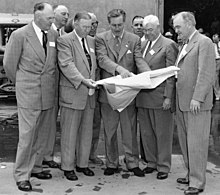
 Walt Disney (center) showing Orange County officials plans for Disneyland's layout in December 1954The concept for Disneyland began when Walt Disney was visiting Griffith Park in Los Angeles with his daughters Diane and Sharon. While watching them ride the merry-go-round, he came up with the idea of a place where adults and their children could go and have fun together. His dream lay dormant for many years.[3] Walt Disney also may have been influenced by his father's memories of the World's Columbian Exposition of 1893 in Chicago (his father worked at the Exposition). The Midway Plaisance there included a set of attractions representing various countries from around the world and others representing various periods of man; it also included many rides including the first Ferris wheel, a "sky" ride, a passenger train that circled the perimeter, and a Wild West Show. Another likely influence was Benton Harbor, Michigan's nationally famous House of David's Eden Springs Park. Walt Disney visited the park and ultimately bought one of the older miniature trains originally used there; the colony had the largest miniature railway setup in the world at the time.
While many people wrote letters to Walt Disney about visiting the Disney Studio, he realized that a functional movie studio had little to offer to the visiting fans. This began to foster ideas of building a site near his Burbank studios for tourists to visit. His ideas then evolved to a small play park with a boat ride and other themed areas. Disney's initial concept, his "Mickey Mouse Park", started with an 8-acre (3.2 ha) plot across Riverside Drive. Disney started to visit other parks for inspiration and ideas, including Tivoli Gardens in Denmark, Efteling in The Netherlands and Greenfield Village, Playland, and Children's Fairyland in the USA. He started his designers working on concepts, but these would grow into a project much larger than could be contained in 8 acres (3.2 ha).[
Disney hired a consultant, Harrison Price from Stanford Research Institute, to gauge the proper area to locate the theme park based on the area's potential growth. With the report from Price, Disney acquired 160 acres (65 ha) of orange groves and walnut trees in Anaheim, southeast of Los Angeles in neighboring Orange County.
Difficulties in obtaining funding prompted Disney to investigate new methods of fundraising. He decided to use television, and created a show named Disneyland which was broadcast on the then-fledgling ABC television network. In return, the network agreed to help finance the new park. For the first five years of its operation, Disneyland was owned by Disneyland, Inc., which was jointly owned by Walt Disney Productions, Walt Disney, Western Publishing and ABC. In addition, Disney rented out many of the shops on Main Street, U.S.A. to outside companies. By 1960 Walt Disney Productions completely bought out ABC's, Western Publishing and Walt Disney's shares.
Construction began on July 16, 1954 and cost $17 million to complete. The park was opened one year and one day later. U.S. Route 101 (later Interstate 5) was under construction at the same time just to the north of the site; in preparation for the traffic Disneyland was expected to bring, two more lanes were added to the freeway before the park was finished.
 An aerial view of Disneyland in 1956. The entire route of the Disneyland Railroad is clearly visible as it encircles the park.Disneyland Park was opened to the public on July 18, 1955 with only 20 attractions. A special "International Press Preview" event was held on Sunday, July 17, 1955, which was only open to invited guests and the media. The Special Sunday events, including the dedication, were televised nationwide and anchored by three of Walt Disney's friends from Hollywood: Art Linkletter, Bob Cummings, and Ronald Reagan. ABC broadcast the event live on its network.
The event did not go smoothly. The park was overcrowded as the by-invitation-only affair was plagued with counterfeit tickets. Only 11,000 people were expected to show up, but a staggering 28,154 was the eventual population. Movie stars and other famous figures scheduled to come every two hours showed up all at once. All major roads nearby were empty. The temperature was an unusually high 101 °F (38 °C), and a plumbers' strike left many of the park's drinking fountains dry. Disney was given a choice of having working fountains or running toilets and he chose the latter.
This generated negative publicity since Pepsi sponsored the park's opening; disappointed guests believed the inoperable fountains were a cynical way to sell soda. The asphalt that had been poured just that morning was so soft that ladies' high-heeled shoes sank into it. Vendors ran out of food. A gas leak in Fantasyland caused Adventureland, Frontierland, and Fantasyland to close for the afternoon. Some parents were seen throwing their children over the shoulders of crowds to get them onto rides such as the King Arthur Carrousel.
The park got such bad press for the "International Press Preview" that Walt Disney invited attendees back for a private "second day" to experience Disneyland properly. In later years Disney and his 1955 executives referred to July 17, 1955 as "Black Sunday". Today, cast members wear pin badges on July 17 in celebration of the park's anniversary, stating how many years it has been since the 1955 opening. But for the first decade or so, Disney officially stated that opening day was on July 18, 1955 and celebrated the 18th as its Anniversary. For example, a 1967 Disneyland press release referred to July 17, 1955, as "Dedication Day" and not "Opening Day."
On Opening Day, Monday July 18, crowds started to gather in line as early as 2 a.m., and the first person to buy a ticket and enter the park was David MacPherson with admission ticket number 2, as Roy O. Disney arranged to pre-purchase ticket number 1 from Curtis Lineberry, the manager of admissions. Walt Disney had an official photo taken with two children, Christine Vess Watkins (age 5) and Michael Schwartner (7); the photo of the three carries an inaccurate caption identifying the children as the first two guests of Disneyland. Watkins and Schwartner both received lifetime passes to Disneyland that day, and MacPherson was awarded one shortly thereafter, which was later expanded to every single Disney-owned park in the world. Approximately 50,000 guests attended the Monday Opening day.
There was some controversy about the lack of African American employees at the park. Since 1963, civil rights activists were pressuring Disneyland to start hiring black people. The Disneyland executives said they would "consider" their requests. Despite a lack of Black employees, Disneyland had hired people of Asian descent like Ty Wong and Bob Kuwahara.
 Downtown DisneyThe park's management team during the mid-1990s was a source of controversy among Disneyland fans and employees. In an effort to boost profits, various changes began by then-executives Cynthia Harriss and Paul Pressler. While their actions provided a short-term increase in shareholder returns, they drew widespread criticism from employees and guests alike for the lack of foresight. With the retail background of Harriss and Pressler, Disneyland's focus gradually shifted from attractions to merchandising. Outside consultants McKinsey & Company were also brought in to help streamline operations, which resulted in many changes and cutbacks. After nearly a decade of deferred maintenance, Walt Disney's original theme park was showing visible signs of neglect. Fans of the park decried the perceived decline in customer value and park quality and rallied for the dismissal of the management team.
Concept and construction

While many people wrote letters to Walt Disney about visiting the Disney Studio, he realized that a functional movie studio had little to offer to the visiting fans. This began to foster ideas of building a site near his Burbank studios for tourists to visit. His ideas then evolved to a small play park with a boat ride and other themed areas. Disney's initial concept, his "Mickey Mouse Park", started with an 8-acre (3.2 ha) plot across Riverside Drive. Disney started to visit other parks for inspiration and ideas, including Tivoli Gardens in Denmark, Efteling in The Netherlands and Greenfield Village, Playland, and Children's Fairyland in the USA. He started his designers working on concepts, but these would grow into a project much larger than could be contained in 8 acres (3.2 ha).[
Disney hired a consultant, Harrison Price from Stanford Research Institute, to gauge the proper area to locate the theme park based on the area's potential growth. With the report from Price, Disney acquired 160 acres (65 ha) of orange groves and walnut trees in Anaheim, southeast of Los Angeles in neighboring Orange County.
Difficulties in obtaining funding prompted Disney to investigate new methods of fundraising. He decided to use television, and created a show named Disneyland which was broadcast on the then-fledgling ABC television network. In return, the network agreed to help finance the new park. For the first five years of its operation, Disneyland was owned by Disneyland, Inc., which was jointly owned by Walt Disney Productions, Walt Disney, Western Publishing and ABC. In addition, Disney rented out many of the shops on Main Street, U.S.A. to outside companies. By 1960 Walt Disney Productions completely bought out ABC's, Western Publishing and Walt Disney's shares.

Construction began on July 16, 1954 and cost $17 million to complete. The park was opened one year and one day later. U.S. Route 101 (later Interstate 5) was under construction at the same time just to the north of the site; in preparation for the traffic Disneyland was expected to bring, two more lanes were added to the freeway before the park was finished.
July 1955: Dedication Day and Opening Day

The event did not go smoothly. The park was overcrowded as the by-invitation-only affair was plagued with counterfeit tickets. Only 11,000 people were expected to show up, but a staggering 28,154 was the eventual population. Movie stars and other famous figures scheduled to come every two hours showed up all at once. All major roads nearby were empty. The temperature was an unusually high 101 °F (38 °C), and a plumbers' strike left many of the park's drinking fountains dry. Disney was given a choice of having working fountains or running toilets and he chose the latter.
This generated negative publicity since Pepsi sponsored the park's opening; disappointed guests believed the inoperable fountains were a cynical way to sell soda. The asphalt that had been poured just that morning was so soft that ladies' high-heeled shoes sank into it. Vendors ran out of food. A gas leak in Fantasyland caused Adventureland, Frontierland, and Fantasyland to close for the afternoon. Some parents were seen throwing their children over the shoulders of crowds to get them onto rides such as the King Arthur Carrousel.
The park got such bad press for the "International Press Preview" that Walt Disney invited attendees back for a private "second day" to experience Disneyland properly. In later years Disney and his 1955 executives referred to July 17, 1955 as "Black Sunday". Today, cast members wear pin badges on July 17 in celebration of the park's anniversary, stating how many years it has been since the 1955 opening. But for the first decade or so, Disney officially stated that opening day was on July 18, 1955 and celebrated the 18th as its Anniversary. For example, a 1967 Disneyland press release referred to July 17, 1955, as "Dedication Day" and not "Opening Day."
On Opening Day, Monday July 18, crowds started to gather in line as early as 2 a.m., and the first person to buy a ticket and enter the park was David MacPherson with admission ticket number 2, as Roy O. Disney arranged to pre-purchase ticket number 1 from Curtis Lineberry, the manager of admissions. Walt Disney had an official photo taken with two children, Christine Vess Watkins (age 5) and Michael Schwartner (7); the photo of the three carries an inaccurate caption identifying the children as the first two guests of Disneyland. Watkins and Schwartner both received lifetime passes to Disneyland that day, and MacPherson was awarded one shortly thereafter, which was later expanded to every single Disney-owned park in the world. Approximately 50,000 guests attended the Monday Opening day.
The early years
In September 1959, Soviet Premier Nikita Khrushchev spent thirteen days in the United States. On his visit Khrushchev had two requests: to visit Disneyland and to meet John Wayne, Hollywood's top box-office draw. Due to the Cold War tension and security concerns, he was famously denied an excursion to Disneyland. The Shah of Iran and Empress Farah were invited to Disneyland by Walt Disney in early 1960s. The video of the Shah and Disney riding the Matterhorn roller coaster is available on YouTube.There was some controversy about the lack of African American employees at the park. Since 1963, civil rights activists were pressuring Disneyland to start hiring black people. The Disneyland executives said they would "consider" their requests. Despite a lack of Black employees, Disneyland had hired people of Asian descent like Ty Wong and Bob Kuwahara.
1990s transition: Park becomes Resort
In the late 1990s, work began to expand on the one-park, one-hotel property. Disneyland Park, the Disneyland Hotel and the site of the original parking lot as well as acquired surrounding properties were earmarked to become part of a greater vacation resort development. The new components of this resort were to be another theme park, Disney California Adventure Park; a shopping, dining and entertainment complex, Downtown Disney; a remodeled Disneyland Hotel; Disney's Grand Californian Hotel & Spa; and the acquisition of the Pan Pacific Hotel (later to be remodeled and renamed Disney's Paradise Pier Hotel). Because the existing parking lot (south of Disneyland) was built upon by these projects, the six-level, 10,250-space Mickey and Friends parking structure was constructed in the northwest corner of the property. At the time of its completion in 2000, it was the largest parking structure in the United States.

HTML Comment Box is loading comments...
Langganan:
Postingan (Atom)