Sabtu, 21 April 2012
Park Layout
The park is divided into "lands" (themed areas) and well-concealed backstage areas. On entering a land, a guest is completely immersed in a themed environment and is unable to see or hear any other realm. The idea behind this was to develop theatrical "stages" with seamless passages from one land to the next.[5] The public areas occupy approximately 85 acres (34 ha). When the park initially opened, it consisted of five themed areas:
Main Street, U.S.A., designed to resemble an early 20th-century Midwest town;
Adventureland, featuring jungle-themed adventures;
Frontierland, illustrating an American Old West frontier town;
Fantasyland, bringing to life characters and places from Disney's animated movies.
Tomorrowland, an optimistic vision of the future.
Since the initial opening, additional areas have been added:
In 1957, Holidayland, a 9 acres (3.6 ha) recreation area including a circus and baseball diamond, which was closed in late 1961.
In 1966, New Orleans Square, based on 19th-century New Orleans.
In 1972, Bear Country, themed around the mountain forests of the American South. It was later renamed Critter Country and themed around Splash Mountain's Song of the South elements.
In 1993, Mickey's Toontown, themed around the Toontown seen in the film Who Framed Roger Rabbit.
Throughout the park are 'Hidden Mickeys', or representations of Mickey Mouse heads inserted subtly into the design of attractions and environmental decor.
An elevated berm supports a narrow gauge railroad that circumnavigates the park. Disney California Adventure Park was added in what used to be a parking lot for Disneyland guests.
Lands of Disneyland
Disneyland has eight themed areas or "lands" that host various shops, restaurants, live entertainment, and attractions. A ninth area (albeit defunct) is Holidayland, a picnic ground which operated between 1957 and 1961 and is often referred to as the "lost" land of Disneyland.
Main Street, U.S.A.
Main Street, U.S.A. is patterned after a typical Midwest town of the early 20th century. Walt Disney derived inspiration from his boyhood town of Marceline, Missouri and worked closely with designers and architects to develop the Main Street appeal. It is the first area guests see when they enter the park (if not entering by monorail), and is how guests reach Central Plaza. At the center of The Magic Kingdom and immediately North of Central Plaza stands Sleeping Beauty Castle, which provides entrance to Fantasyland by way of a drawbridge across a moat. Adventureland, Frontierland, and Tomorrowland are arrayed on both sides of the castle.
“ For those of us who remember the carefree time it recreates, Main Street will bring back happy memories. For younger visitors, it is an adventure in turning back the calendar to the days of grandfather's youth. ”
— Walt E. Disney
Main Street, U.S.A. is reminiscent of the Victorian period of America with the train station, town square, movie theater, city hall, firehouse complete with a steam-powered pump engine, emporium, shops, arcades, double-decker bus, horse-drawn streetcar, jitneys and other bits of memorabilia. Main Street is also home to the Disney Art Gallery and the Opera House which showcases Great Moments with Mr. Lincoln a show featuring an Audio-Animatronic version of the president. There are many specialty stores on Main Street including: a candy store, jewelry and watch shop, a silhouette station, a store that sells Disney collectable items created by various artists, and a hat shop where you have the option of creating your own ear hat along with a personalized embrodiery. At the far end of Main Street, U.S.A. is Sleeping Beauty Castle, and the Central Plaza (also known as the Hub), which is a portal to most of the themed lands. Several lands are not directly connected to the Central Plaza—namely, New Orleans Square, Critter Country and Mickey's Toontown.
The design of Main Street, U.S.A. uses the technique of forced perspective to create an illusion of height. Buildings along Main Street are built at 3/4 scale on the first level, then 5/8 on the second story, and 1/2 scale on the third—reducing the scale by 1/8 each level up.
Adventureland
Adventureland is designed to recreate the feel of an exotic tropical place in a far-off region of the world. "To create a land that would make this dream reality", said Walt Disney, "we pictured ourselves far from civilization, in the remote jungles of Asia and Africa." Attractions include opening day's Jungle Cruise, the "Temple of the Forbidden Eye" in Indiana Jones Adventure, and Tarzan's Treehouse, which is a conversion of the earlier Swiss Family Robinson Tree House from the Walt Disney film, Swiss Family Robinson. Walt Disney's Enchanted Tiki Room which is located at the entrance to Adventureland is the first feature attraction to employ Audio-Animatronics, a computer synchronization of sound and robotics.
New Orleans Square
New Orleans Square is a themed land based on 19th-century New Orleans. It was opened to the public on July 24, 1966. Despite its age, it is still very popular with Disneyland guests, being home to some of the park's most popular attractions: Pirates of the Caribbean and the Haunted Mansion, including nighttime entertainment in Fantasmic!.
Frontierland
Frontierland recreates the setting of pioneer days along the American frontier. According to Walt Disney, "All of us have cause to be proud of our country's history, shaped by the pioneering spirit of our forefathers. Our adventures are designed to give you the feeling of having lived, even for a short while, during our country's pioneer days." Frontierland is home to the Pinewood Indians band of animatronic Native Americans, who live on the banks of the Rivers of America. Entertainment and attractions include Big Thunder Mountain Railroad, the Mark Twain Riverboat, the Sailing Ship Columbia, Pirate's Lair on Tom Sawyer Island, and Frontierland Shootin' Exposition. Frontierland is also home to the Golden Horseshoe Saloon, an Old West-style show palace, where currently the comedic troupe "Billy Hill and the Hillbillies" entertains guests.
Critter Country
Critter Country opened in 1972 as "Bear Country", and was renamed in 1988. Formerly the area was home to Indian Village, where indigenous tribespeople demonstrated their dances and other customs. Today, the main draw of the area is Splash Mountain, a log-flume journey inspired by the Uncle Remus stories of Joel Chandler Harris and the animated segments of Disney's Academy Award-winning 1946 film, Song of the South. In 2003, a dark ride called The Many Adventures of Winnie the Pooh replaced the Country Bear Jamboree, which closed in 2001. The Country Bear Jamboree presented shows featuring singing bear characters that were visualized through Disney's electronically controlled and mechanically animated puppets, known as Audio-Animatronics.
Fantasyland
Fantasyland is the area of Disneyland of which Walt Disney said, "What youngster has not dreamed of flying with Peter Pan over moonlit London, or tumbling into Alice's nonsensical Wonderland? In Fantasyland, these classic stories of everyone's youth have become realities for youngsters – of all ages – to participate in." Fantasyland was originally styled in a medieval European fairground fashion, but its 1983 refurbishment turned it into a Bavarian village. Attractions include several dark rides, the King Arthur Carrousel, and various family attractions. Fantasyland has the most fiber optics in the park; more than half of them are in Peter Pan's Flight. Sleeping Beauty's Castle once again features a walk-through story telling of Briar Rose's adventure as Sleeping Beauty. Opened in 1959, changed in 1972, then closed in 1992 for reasons of security and the new installation of pneumatic ram firework shell mortars for "Believe, There's Magic in the Stars". The walkthrough reopened 2008 and it features new renditions and methods of storytelling and the restored work of Eyvind Earle (not Mary Blair).
Mickey's Toontown
Mickey's Toontown opened in 1993 and was partly inspired by the fictional Los Angeles suburb of Toontown in the Walt Disney Studios' 1988 release Who Framed Roger Rabbit. Mickey's Toontown is based on a 1930s cartoon aesthetic and is home to Disney's most popular cartoon characters. Toontown features two main attractions: Gadget's Go Coaster and Roger Rabbit's Car Toon Spin. The "city" is also home to cartoon character's houses such as the house of Mickey Mouse, Minnie Mouse and Goofy, as well as Donald Duck's boat.
Tomorrowland
During the 1955 inauguration Walt Disney dedicated Tomorrowland with these words: "Tomorrow can be a wonderful age. Our scientists today are opening the doors of the Space Age to achievements that will benefit our children and generations to come. The Tomorrowland attractions have been designed to give you an opportunity to participate in adventures that are a living blueprint of our future." Disneyland producer Ward Kimball had rocket scientists Wernher von Braun, Willy Ley, and Heinz Haber serve as technical consultants during the original design of Tomorrowland.[18] Initial attractions included Rocket to the Moon, Astro-Jets and Autopia; later, the first incarnation of the Submarine Voyage was added. The area underwent a major transformation in 1967 to become New Tomorrowland, and then again in 1998 when its focus was changed to present a "retro-future" theme reminiscent of the illustrations of Jules Verne.
Current attractions include Space Mountain, Innoventions, Captain EO Tribute, Autopia, the Disneyland Monorail Tomorrowland Station, the Astro Orbitor and Buzz Lightyear Astro Blasters. Finding Nemo Submarine Voyage opened on June 11, 2007, resurrecting the original Submarine Voyage which closed in 1998. Star Tours was closed in July 2010, and replaced with Star Tours: The Adventures Continue in June 2011.
Theatrical Terminology
Disneyland staff use theatrical terminology. This is to emphasize that a visit to the park is intended to be similar to witnessing a performance. For example, visitors are referred to as "guests" and park employees as "cast members". "On stage" refers to any area of the resort that is open to guests. "Backstage" refers to any area of the resort that is closed to guests. A crowd is referred to as an "audience". "Costume" is the attire that cast members who perform the day-to-day operations of the park must wear. Terms such as "uniform" are not used. "Show" is the resort's presentation to its guests, such as the color and façades of buildings, placement of rides and attractions, costumes to match the themed lands. When signing credit card receipts for souvenirs or food, guests are asked for their "autograph". "Stage managers" are responsible for overseeing the operation of the different areas of the park. Cast members who are in charge of a specific team are called "leads," as in a film or theater "lead role". In the earlier years of the park, the offices where administrative work took place were referred to as "production offices". "Production schedulers" build employee work schedules to meet the necessary workload, while "stage schedulers" handle day-to-day changes in that work schedule (such as a change in park hours, necessitating a change in everybody's shifts).
Each cast member's job is called a "role". When working in their roles, cast members must follow a "script". This is not a traditional play script, but more of a strict code of conduct and approved, themed phraseology that cast members may use when at work. Park employees are often reminded that "no" and "I don't know" are not a part of a cast member's script.

Sabtu, 14 April 2012
Planning Disneyland
On a business trip to Chicago in the late-1940s, Disney drew sketches of his ideas for an amusement park where he envisioned his employees spending time with their children. The idea for a children's theme park came after a visit to Children's Fairyland in Oakland, California. It also said that Disney may have been inspired to create Disneyland in the park Republic of the Children located in Manuel B. Gonnet, La Plata, Argentina, and opened in 1951.[90] This plan was originally intended to be built on a plot located across the street to the south of the studio. These original ideas developed into a concept for a larger enterprise that would become Disneyland. Disney spent five years developing Disneyland and created a new subsidiary company, WED Enterprises, to carry out planning and production of the park. A small group of Disney studio employees joined the Disneyland development project as engineers and planners, and were dubbed Imagineers.[citation needed]
As Disney explained one of his earliest plans to Herb Ryman, who created the first aerial drawing of Disneyland presented to the Bank of America during fund raising for the project, he said, "Herbie, I just want it to look like nothing else in the world. And it should be surrounded by a train."[91] Entertaining his daughters and their friends in his backyard and taking them for rides on his Carolwood Pacific Railroad had inspired Disney to include a railroad in the plans for Disneyland.
 Disneyland Grand Opening
Disneyland officially opened on July 18, 1955. On Sunday, July 17, 1955, Disneyland hosted a live TV preview, among the thousands of people in attendance were Ronald Reagan, Bob Cummings and Art Linkletter, who shared cohosting duties, as well as the mayor of Anaheim. Walt gave the following dedication day speech:
“ To all who come to this happy place; welcome. Disneyland is your land. Here age relives fond memories of the past .... and here youth may savor the challenge and promise of the future. Disneyland is dedicated to the ideals, the dreams and the hard facts that have created America ... with the hope that it will be a source of joy and inspiration to all the world. ”
Disneyland Grand Opening
Disneyland officially opened on July 18, 1955. On Sunday, July 17, 1955, Disneyland hosted a live TV preview, among the thousands of people in attendance were Ronald Reagan, Bob Cummings and Art Linkletter, who shared cohosting duties, as well as the mayor of Anaheim. Walt gave the following dedication day speech:
“ To all who come to this happy place; welcome. Disneyland is your land. Here age relives fond memories of the past .... and here youth may savor the challenge and promise of the future. Disneyland is dedicated to the ideals, the dreams and the hard facts that have created America ... with the hope that it will be a source of joy and inspiration to all the world. ”


Sabtu, 07 April 2012
About Walt Disney
Walter Elias "Walt" Disney (December 5, 1901 – December 15, 1966) was an American film producer, director, screenwriter, voice actor, animator, entrepreneur, entertainer, international icon, and philanthropist, well known for his influence in the field of entertainment during the 20th century. Along with his brother Roy O. Disney, he was co-founder of Walt Disney Productions, which later became one of the best-known motion picture producers in the world. The corporation is now known as The Walt Disney Company and had an annual revenue of approximately US$36 billion in the 2010 financial year.
Disney is particularly noted as a film producer and a popular showman, as well as an innovator in animation and theme park design. He and his staff created some of the world's most well-known fictional characters including Mickey Mouse, for whom Disney himself provided the original voice. During his lifetime he received four honorary Academy Awards and won 22 Academy Awards from a total of 59 nominations, including a record four in one year, giving him more awards and nominations than any other individual in history. Disney also won seven Emmy Awards and gave his name to the Disneyland and Walt Disney World Resort theme parks in the U.S., as well as the international resorts Tokyo Disney, Disneyland Paris, and Disneyland Hong Kong.
The year after his December 15, 1966 death from lung cancer in Burbank, California, construction began on Walt Disney World Resort in Florida. His brother Roy Disney inaugurated the Magic Kingdom on October 1, 1971.
 Disney was born on December 5, 1901, at 2156 N. Tripp Avenue in Chicago's Hermosa community area to Irish-Canadian father Elias Disney and German-American mother Flora Call Disney.His great-grandfather, Arundel Elias Disney, had emigrated from Gowran, County Kilkenny, Ireland where he was born in 1801. Arundel Disney was a descendant of Robert d'Isigny, a Frenchman who had travelled to England with William the Conqueror in 1066. With the d'Isigny name anglicised as "Disney", the family settled in a village now known as Norton Disney, south of the city of Lincoln, in the county of Lincolnshire.
In 1878, Disney's father Elias had moved from Huron County, Ontario, Canada to the United States at first seeking gold in California before finally settling down to farm with his parents near Ellis, Kansas, until 1884. Elias worked for the Union Pacific Railroad and married Flora Call on January 1, 1888, in Acron, Florida. The family moved to Chicago, Illinois, in 1890,[9] hometown of his brother Robert who helped Elias financially for most of his early life. In 1906, when Walt was four, Elias and his family moved to a farm in Marceline, Missouri,[10] where his brother Roy had recently purchased farmland. In Marceline, Disney developed his love for drawing[11] with one of the family's neighbors, a retired doctor named "Doc" Sherwood, paying him to draw pictures of Sherwood's horse, Rupert. His interest in trains also developed in Marceline, a town that owed its existence to the Atchison, Topeka and Santa Fe Railway which ran through it. Walt would put his ear to the tracks in anticipation of the coming train then try and spot his uncle, engineer Michael Martin, conducting the train.
10-year old Walt Disney (center right) at a gathering of Kansas City newsboys in 1912.The Disneys remained in Marceline for four years, before moving to Kansas City in 1911 where Walt and his younger sister Ruth attended the Benton Grammar School. At school he met Walter Pfeiffer who came from a family of theatre aficionados, and introduced Walt to the world of vaudeville and motion pictures. Before long Walt was spending more time at the Pfeiffers' than at home. As well as attending Saturday courses at the Kansas City Art Institute, Walt often took Ruth to Electric Park, 15 blocks from their home, which Disney would later acknowledge as a major influence of his design of Disneyland).[citation needed]
Teenage yearsIn 1917, Elias acquired shares in the O-Zell jelly factory in Chicago and moved his family back to the city, where in the fall Disney began his freshman year at McKinley High School and took night courses at the Chicago Art Institute. He became the cartoonist for the school newspaper, drawing patriotic topics and focusing on World War I. Despite dropping out of high school at the age of sixteen to join the army, Disney was rejected for being underage.
After his rejection by the army, Walt and a friend decided to join the Red Cross.[19] Soon after joining he was sent to France for a year, where he drove an ambulance, but only after the armistice was signed on November 11, 1918.
Disney as an ambulance driver immediately after World War IHoping to find work outside the Chicago O-Zell factory, in 1919 Walt moved back to Kansas City to begin his artistic career. After considering whether to become an actor or a newspaper artist, he decided on a career as a newspaper artist, drawing political caricatures or comic strips. But when nobody wanted to hire him as either an artist or even as an ambulance driver, his brother Roy, then working in a local bank, got Walt a temporary job through a bank colleague at the Pesmen-Rubin Art Studio where he created advertisements for newspapers, magazines, and movie theaters. At Pesmen-Rubin he met cartoonist Ubbe Iwerks and when their time at the studio expired, they decided to start their own commercial company together.
In January 1920, Disney and Iwerks formed a short-lived company called, "Iwerks-Disney Commercial Artists". However, following a rough start, Disney left temporarily to earn money at the Kansas City Film Ad Company, and was soon joined by Iwerks who was not able to run their business alone. While working for the Kansas City Film Ad Company, where he made commercials based on cutout animations, Disney became interested in animation, and decided to become an animator. The owner of the Ad Company, A.V. Cauger, allowed him to borrow a camera from work to experiment with at home. After reading the Edwin G. Lutz book Animated Cartoons: How They Are Made, Their Origin and Development, Disney considered cel animation to be much more promising than the cutout animation he was doing for Cauger. Walt eventually decided to open his own animation business, and recruited a fellow co-worker at the Kansas City Film Ad Company, Fred Harman, as his first employee. Walt and Harman then secured a deal with local theater owner Frank L. Newman, arguably the most popular "showman" in the Kansas City area at the time, to screen their cartoons at his local theater, which they titled Laugh-O-Grams.
Laugh-O-Gram StudioPresented as "Newman Laugh-O-Grams", Disney's cartoons became widely popular in the Kansas City area[30] and through their success, he was able to acquire his own studio, also called Laugh-O-Gram, for which he hired a vast number of additional animators, including Fred Harman's brother Hugh Harman, Rudolf Ising, and his close friend Ubbe Iwerks.Unfortunately, studio profits were insufficient to cover the high salaries paid to employees. Unable to successfully manage money, Disney's studio became loaded with debt and wound up bankrupt whereupon he decided to set up a studio in the movie industry's capital city, Hollywood, California.
HollywoodDisney and his brother Roy pooled their money and set up a cartoon studio in Hollywood where they needed to find a distributor for Walt's new Alice Comedies, which he had started making while in Kansas City but never got to distribute. Disney sent an unfinished print to New York distributor Margaret Winkler, who promptly wrote back to him that she was keen on a distribution deal for more live-action/animated shorts based upon Alice's Wonderland.
Alice ComediesVirginia Davis, the live-action star of Alice’s Wonderland and her family relocated from Kansas City to Hollywood at Disney's request, as did Iwerks and his family. This was the beginning of the Disney Brothers' Studio located on Hyperion Avenue in the Silver Lake district, where it remained until 1939. In 1925, Disney hired a young woman named Lillian Bounds to ink and paint celluloid. After a brief courtship, the pair married that same year.
The new series, Alice Comedies, proved reasonably successful, and featured both Dawn O'Day and Margie Gay as Alice with Lois Hardwick also briefly assuming the role. By the time the series ended in 1927, its focus was more on the animated characters and in particular a cat named Julius who resembled Felix the Cat, rather than the live-action Alice.
Oswald the Lucky RabbitMain article: Oswald the Lucky Rabbit
By 1927, Charles Mintz had married Margaret Winkler and assumed control of her business. He then ordered a new all-animated series to be put into production for distribution through Universal Pictures. The new series, Oswald the Lucky Rabbit, was an almost instant success, and the character, Oswald — drawn and created by Iwerks — became a popular figure. The Disney studio expanded and Walt re-hired Harman, Rudolph Ising, Carman Maxwell, and Friz Freleng from Kansas City.
Disney went to New York in February 1928 to negotiate a higher fee per short and was shocked when Mintz told him that not only did he want to reduce the fee he paid Disney per short but also that he had most of his main animators, including Harman, Ising, Maxwell, and Freleng—but not Iwerks, who refused to leave Disney—under contract and would start his own studio if Disney did not accept the reduced production budgets. Universal, not Disney, owned the Oswald trademark, and could make the films without Walt. Disney declined Mintz's offer and as a result lost most of his animation staff whereupon he found himself on his own again.[38]
It subsequently took his company 78 years to get back the rights to the Oswald character when in 2006 the Walt Disney Company reacquired the rights to Oswald the Lucky Rabbit from NBC Universal, through a trade for longtime ABC sports commentator Al Michaels.[39]
Mickey MouseMain article: Mickey Mouse
After losing the rights to Oswald, Disney felt the need to develop a new character to replace him, which was based on a mouse he had adopted as a pet while working in his Laugh-O-Gram studio in Kansas City.[40] Ub Iwerks reworked the sketches made by Disney to make the character easier to animate although Mickey's voice and personality were provided by Disney himself until 1947. In the words of one Disney employee, "Ub designed Mickey's physical appearance, but Walt gave him his soul."[40] Besides Oswald and Mickey, a similar mouse-character is seen in the Alice Comedies, which featured "Ike the Mouse". Moreover, the first Flip the Frog cartoon called Fiddlesticks showed a Mickey Mouse look-alike playing fiddle. The initial films were animated by Iwerks with his name prominently featured on the title cards. Originally named "Mortimer", the mouse was later re-christened "Mickey" by Lillian Disney who thought that the name Mortimer did not fit. Mortimer later became the name of Mickey's rival for Minnie – taller than his renowned adversary and speaking with a Brooklyn accent.
Steamboat WillieThe first animated short to feature Mickey, Plane Crazy was a silent film like all of Disney's previous works. After failing to find a distributor for the short and its follow-up, The Gallopin' Gaucho, Disney created a Mickey cartoon with sound called Steamboat Willie. A businessman named Pat Powers provided Disney with both distribution and Cinephone, a sound-synchronization process. Steamboat Willie became an instant success,[41] and Plane Crazy, The Galloping Gaucho, and all future Mickey cartoons were released with soundtracks. After the release of Steamboat Willie, Disney successfully used sound in all of his subsequent cartoons, and Cinephone also became the new distributor for Disney's early sound cartoons.[42] Mickey soon eclipsed Felix the Cat as the world's most popular cartoon character and by 1930, despite their having sound, cartoons featuring Felix had faded from the screen after failing to gain attention. Mickey's popularity would subsequently skyrocket in the early 1930s.
Silly SymphoniesFollowing in the footsteps of Mickey Mouse series, a series of musical shorts titled, Silly Symphonies were released in 1929. The first, The Skeleton Dance was entirely drawn and animated by Iwerks, who was also responsible for drawing the majority of cartoons released by Disney in 1928 and 1929. Although both series were successful, the Disney studio thought it was not receiving its rightful share of profits from Pat Powers,and in 1930, Disney signed a new distribution deal with Columbia Pictures. The original basis of the cartoons was their musical novelty with the first Silly Symphony cartoons featuring scores by Carl Stalling.
Iwerks was soon lured by Powers into opening his own studio with an exclusive contract, while Stalling would also later leave Disney to join Iwerks. Iwerks launched his Flip the Frog series with the first voiced color cartoon Fiddlesticks, filmed in two-strip Technicolor. Iwerks also created two other cartoon series, Willie Whopper and the Comicolor. In 1936, Iwerks shut down his studio in order to work on various projects dealing with animation technology. He would return to Disney in 1940 and go on to pioneer a number of film processes and specialized animation technologies in the studio's research and development department.
By 1932, although Mickey Mouse had become a relatively popular cinema character, Silly Symphonies was not as successful. The same year also saw competition increase as Max Fleischer's flapper cartoon character, Betty Boop, gained popularity among theater audiences. Fleischer, considered Disney's main rival in the 1930s, was also the father of Richard Fleischer, whom Disney would later hire to direct his 1954 film 20,000 Leagues Under the Sea. Meanwhile, Columbia Pictures dropped the distribution of Disney cartoons to be replaced by United Artists. In late 1932, Herbert Kalmus, who had just completed work on the first three-strip technicolor camera, approached Walt and convinced him to reshoot the black and white Flowers and Trees in three-strip Technicolor. Flowers and Trees would go on to be a phenomenal success and would also win the first 1932 Academy Award for Best Short Subject: Cartoons. After the release of Flowers and Trees, all subsequent Silly Symphony cartoons were in color while Disney was also able to negotiate a two-year deal with Technicolor, giving him the sole right to use their three-strip process, a period eventually extended to five years.Through Silly Symphonies, Disney also created his most successful cartoon short of all time, The Three Little Pigs (1933). The cartoon ran in theaters for many months, featuring the hit song that became the anthem of the Great Depression, "Who's Afraid of the Big Bad Wolf".
One of two stars dedicated to Walt Disney on the Hollywood Walk of Fame.First Academy AwardIn 1932, Disney received a special Academy Award for the creation of "Mickey Mouse", a series which switched to color in 1935 and soon launched spin-offs for supporting characters such as Donald Duck, Goofy, and Pluto. Pluto and Donald became standalone cartoons in 1937, with Goofy following in 1939. Of all Mickey's partners, Donald Duck, who first teamed up with Mickey in the 1934 cartoon, Orphan's Benefit, was arguably the most popular, going on to become Disney's second most successful cartoon character of all time.
Disney was born on December 5, 1901, at 2156 N. Tripp Avenue in Chicago's Hermosa community area to Irish-Canadian father Elias Disney and German-American mother Flora Call Disney.His great-grandfather, Arundel Elias Disney, had emigrated from Gowran, County Kilkenny, Ireland where he was born in 1801. Arundel Disney was a descendant of Robert d'Isigny, a Frenchman who had travelled to England with William the Conqueror in 1066. With the d'Isigny name anglicised as "Disney", the family settled in a village now known as Norton Disney, south of the city of Lincoln, in the county of Lincolnshire.
In 1878, Disney's father Elias had moved from Huron County, Ontario, Canada to the United States at first seeking gold in California before finally settling down to farm with his parents near Ellis, Kansas, until 1884. Elias worked for the Union Pacific Railroad and married Flora Call on January 1, 1888, in Acron, Florida. The family moved to Chicago, Illinois, in 1890,[9] hometown of his brother Robert who helped Elias financially for most of his early life. In 1906, when Walt was four, Elias and his family moved to a farm in Marceline, Missouri,[10] where his brother Roy had recently purchased farmland. In Marceline, Disney developed his love for drawing[11] with one of the family's neighbors, a retired doctor named "Doc" Sherwood, paying him to draw pictures of Sherwood's horse, Rupert. His interest in trains also developed in Marceline, a town that owed its existence to the Atchison, Topeka and Santa Fe Railway which ran through it. Walt would put his ear to the tracks in anticipation of the coming train then try and spot his uncle, engineer Michael Martin, conducting the train.
10-year old Walt Disney (center right) at a gathering of Kansas City newsboys in 1912.The Disneys remained in Marceline for four years, before moving to Kansas City in 1911 where Walt and his younger sister Ruth attended the Benton Grammar School. At school he met Walter Pfeiffer who came from a family of theatre aficionados, and introduced Walt to the world of vaudeville and motion pictures. Before long Walt was spending more time at the Pfeiffers' than at home. As well as attending Saturday courses at the Kansas City Art Institute, Walt often took Ruth to Electric Park, 15 blocks from their home, which Disney would later acknowledge as a major influence of his design of Disneyland).[citation needed]
Teenage yearsIn 1917, Elias acquired shares in the O-Zell jelly factory in Chicago and moved his family back to the city, where in the fall Disney began his freshman year at McKinley High School and took night courses at the Chicago Art Institute. He became the cartoonist for the school newspaper, drawing patriotic topics and focusing on World War I. Despite dropping out of high school at the age of sixteen to join the army, Disney was rejected for being underage.
After his rejection by the army, Walt and a friend decided to join the Red Cross.[19] Soon after joining he was sent to France for a year, where he drove an ambulance, but only after the armistice was signed on November 11, 1918.
Disney as an ambulance driver immediately after World War IHoping to find work outside the Chicago O-Zell factory, in 1919 Walt moved back to Kansas City to begin his artistic career. After considering whether to become an actor or a newspaper artist, he decided on a career as a newspaper artist, drawing political caricatures or comic strips. But when nobody wanted to hire him as either an artist or even as an ambulance driver, his brother Roy, then working in a local bank, got Walt a temporary job through a bank colleague at the Pesmen-Rubin Art Studio where he created advertisements for newspapers, magazines, and movie theaters. At Pesmen-Rubin he met cartoonist Ubbe Iwerks and when their time at the studio expired, they decided to start their own commercial company together.
In January 1920, Disney and Iwerks formed a short-lived company called, "Iwerks-Disney Commercial Artists". However, following a rough start, Disney left temporarily to earn money at the Kansas City Film Ad Company, and was soon joined by Iwerks who was not able to run their business alone. While working for the Kansas City Film Ad Company, where he made commercials based on cutout animations, Disney became interested in animation, and decided to become an animator. The owner of the Ad Company, A.V. Cauger, allowed him to borrow a camera from work to experiment with at home. After reading the Edwin G. Lutz book Animated Cartoons: How They Are Made, Their Origin and Development, Disney considered cel animation to be much more promising than the cutout animation he was doing for Cauger. Walt eventually decided to open his own animation business, and recruited a fellow co-worker at the Kansas City Film Ad Company, Fred Harman, as his first employee. Walt and Harman then secured a deal with local theater owner Frank L. Newman, arguably the most popular "showman" in the Kansas City area at the time, to screen their cartoons at his local theater, which they titled Laugh-O-Grams.
Laugh-O-Gram StudioPresented as "Newman Laugh-O-Grams", Disney's cartoons became widely popular in the Kansas City area[30] and through their success, he was able to acquire his own studio, also called Laugh-O-Gram, for which he hired a vast number of additional animators, including Fred Harman's brother Hugh Harman, Rudolf Ising, and his close friend Ubbe Iwerks.Unfortunately, studio profits were insufficient to cover the high salaries paid to employees. Unable to successfully manage money, Disney's studio became loaded with debt and wound up bankrupt whereupon he decided to set up a studio in the movie industry's capital city, Hollywood, California.
HollywoodDisney and his brother Roy pooled their money and set up a cartoon studio in Hollywood where they needed to find a distributor for Walt's new Alice Comedies, which he had started making while in Kansas City but never got to distribute. Disney sent an unfinished print to New York distributor Margaret Winkler, who promptly wrote back to him that she was keen on a distribution deal for more live-action/animated shorts based upon Alice's Wonderland.
Alice ComediesVirginia Davis, the live-action star of Alice’s Wonderland and her family relocated from Kansas City to Hollywood at Disney's request, as did Iwerks and his family. This was the beginning of the Disney Brothers' Studio located on Hyperion Avenue in the Silver Lake district, where it remained until 1939. In 1925, Disney hired a young woman named Lillian Bounds to ink and paint celluloid. After a brief courtship, the pair married that same year.
The new series, Alice Comedies, proved reasonably successful, and featured both Dawn O'Day and Margie Gay as Alice with Lois Hardwick also briefly assuming the role. By the time the series ended in 1927, its focus was more on the animated characters and in particular a cat named Julius who resembled Felix the Cat, rather than the live-action Alice.
Oswald the Lucky RabbitMain article: Oswald the Lucky Rabbit
By 1927, Charles Mintz had married Margaret Winkler and assumed control of her business. He then ordered a new all-animated series to be put into production for distribution through Universal Pictures. The new series, Oswald the Lucky Rabbit, was an almost instant success, and the character, Oswald — drawn and created by Iwerks — became a popular figure. The Disney studio expanded and Walt re-hired Harman, Rudolph Ising, Carman Maxwell, and Friz Freleng from Kansas City.
Disney went to New York in February 1928 to negotiate a higher fee per short and was shocked when Mintz told him that not only did he want to reduce the fee he paid Disney per short but also that he had most of his main animators, including Harman, Ising, Maxwell, and Freleng—but not Iwerks, who refused to leave Disney—under contract and would start his own studio if Disney did not accept the reduced production budgets. Universal, not Disney, owned the Oswald trademark, and could make the films without Walt. Disney declined Mintz's offer and as a result lost most of his animation staff whereupon he found himself on his own again.[38]
It subsequently took his company 78 years to get back the rights to the Oswald character when in 2006 the Walt Disney Company reacquired the rights to Oswald the Lucky Rabbit from NBC Universal, through a trade for longtime ABC sports commentator Al Michaels.[39]
Mickey MouseMain article: Mickey Mouse
After losing the rights to Oswald, Disney felt the need to develop a new character to replace him, which was based on a mouse he had adopted as a pet while working in his Laugh-O-Gram studio in Kansas City.[40] Ub Iwerks reworked the sketches made by Disney to make the character easier to animate although Mickey's voice and personality were provided by Disney himself until 1947. In the words of one Disney employee, "Ub designed Mickey's physical appearance, but Walt gave him his soul."[40] Besides Oswald and Mickey, a similar mouse-character is seen in the Alice Comedies, which featured "Ike the Mouse". Moreover, the first Flip the Frog cartoon called Fiddlesticks showed a Mickey Mouse look-alike playing fiddle. The initial films were animated by Iwerks with his name prominently featured on the title cards. Originally named "Mortimer", the mouse was later re-christened "Mickey" by Lillian Disney who thought that the name Mortimer did not fit. Mortimer later became the name of Mickey's rival for Minnie – taller than his renowned adversary and speaking with a Brooklyn accent.
Steamboat WillieThe first animated short to feature Mickey, Plane Crazy was a silent film like all of Disney's previous works. After failing to find a distributor for the short and its follow-up, The Gallopin' Gaucho, Disney created a Mickey cartoon with sound called Steamboat Willie. A businessman named Pat Powers provided Disney with both distribution and Cinephone, a sound-synchronization process. Steamboat Willie became an instant success,[41] and Plane Crazy, The Galloping Gaucho, and all future Mickey cartoons were released with soundtracks. After the release of Steamboat Willie, Disney successfully used sound in all of his subsequent cartoons, and Cinephone also became the new distributor for Disney's early sound cartoons.[42] Mickey soon eclipsed Felix the Cat as the world's most popular cartoon character and by 1930, despite their having sound, cartoons featuring Felix had faded from the screen after failing to gain attention. Mickey's popularity would subsequently skyrocket in the early 1930s.
Silly SymphoniesFollowing in the footsteps of Mickey Mouse series, a series of musical shorts titled, Silly Symphonies were released in 1929. The first, The Skeleton Dance was entirely drawn and animated by Iwerks, who was also responsible for drawing the majority of cartoons released by Disney in 1928 and 1929. Although both series were successful, the Disney studio thought it was not receiving its rightful share of profits from Pat Powers,and in 1930, Disney signed a new distribution deal with Columbia Pictures. The original basis of the cartoons was their musical novelty with the first Silly Symphony cartoons featuring scores by Carl Stalling.
Iwerks was soon lured by Powers into opening his own studio with an exclusive contract, while Stalling would also later leave Disney to join Iwerks. Iwerks launched his Flip the Frog series with the first voiced color cartoon Fiddlesticks, filmed in two-strip Technicolor. Iwerks also created two other cartoon series, Willie Whopper and the Comicolor. In 1936, Iwerks shut down his studio in order to work on various projects dealing with animation technology. He would return to Disney in 1940 and go on to pioneer a number of film processes and specialized animation technologies in the studio's research and development department.
By 1932, although Mickey Mouse had become a relatively popular cinema character, Silly Symphonies was not as successful. The same year also saw competition increase as Max Fleischer's flapper cartoon character, Betty Boop, gained popularity among theater audiences. Fleischer, considered Disney's main rival in the 1930s, was also the father of Richard Fleischer, whom Disney would later hire to direct his 1954 film 20,000 Leagues Under the Sea. Meanwhile, Columbia Pictures dropped the distribution of Disney cartoons to be replaced by United Artists. In late 1932, Herbert Kalmus, who had just completed work on the first three-strip technicolor camera, approached Walt and convinced him to reshoot the black and white Flowers and Trees in three-strip Technicolor. Flowers and Trees would go on to be a phenomenal success and would also win the first 1932 Academy Award for Best Short Subject: Cartoons. After the release of Flowers and Trees, all subsequent Silly Symphony cartoons were in color while Disney was also able to negotiate a two-year deal with Technicolor, giving him the sole right to use their three-strip process, a period eventually extended to five years.Through Silly Symphonies, Disney also created his most successful cartoon short of all time, The Three Little Pigs (1933). The cartoon ran in theaters for many months, featuring the hit song that became the anthem of the Great Depression, "Who's Afraid of the Big Bad Wolf".
One of two stars dedicated to Walt Disney on the Hollywood Walk of Fame.First Academy AwardIn 1932, Disney received a special Academy Award for the creation of "Mickey Mouse", a series which switched to color in 1935 and soon launched spin-offs for supporting characters such as Donald Duck, Goofy, and Pluto. Pluto and Donald became standalone cartoons in 1937, with Goofy following in 1939. Of all Mickey's partners, Donald Duck, who first teamed up with Mickey in the 1934 cartoon, Orphan's Benefit, was arguably the most popular, going on to become Disney's second most successful cartoon character of all time.

Sabtu, 31 Maret 2012
Tokyo Disneyland Hotel
 The Tokyo Disneyland Hotel is the third Disney-brand hotel of the Tokyo Disney Resort. Also, it is the fourth Disneyland Hotel. It is located directly in front of the Tokyo Disneyland park with the Tokyo Disneyland station of the Disney Resort Line monorail system in between. The hotel was designed to reflect early 20th century Victorian architectural style, and to blend seamlessly with the World Bazaar area of Tokyo Disneyland, the monorail station and the main entrance area.
The hotel opened on July 8, 2008, and offers 700 guestrooms along with dining and shopping facilities.
Insidents at Tokyo Disneyland
Parades :
On January 8, 2008, a portion of a parade float collapsed during a presentation of the park's "Disney Dreams On Parade." A steel pillar, estimated to weigh 660 pounds, fell from the Buzz Lightyear float not far from park visitors. No performers or visitors were injured in the collapse. The park canceled its parades for the first time in its history in order to complete safety checks.
Space Mountain :
On December 5, 2003, a roller coaster train derailed as it was returning to the station. No riders were injured, and the ride was closed pending an investigation. A January 2004 investigation completed by Oriental Land Company, the park's owner/operator, determined that an axle on the train had failed because its diameter was smaller than the specifications for the part required. The attraction re-opened in February 2004, after 17 park officials were reprimanded for the accident.
The Tokyo Disneyland Hotel is the third Disney-brand hotel of the Tokyo Disney Resort. Also, it is the fourth Disneyland Hotel. It is located directly in front of the Tokyo Disneyland park with the Tokyo Disneyland station of the Disney Resort Line monorail system in between. The hotel was designed to reflect early 20th century Victorian architectural style, and to blend seamlessly with the World Bazaar area of Tokyo Disneyland, the monorail station and the main entrance area.
The hotel opened on July 8, 2008, and offers 700 guestrooms along with dining and shopping facilities.
Insidents at Tokyo Disneyland
Parades :
On January 8, 2008, a portion of a parade float collapsed during a presentation of the park's "Disney Dreams On Parade." A steel pillar, estimated to weigh 660 pounds, fell from the Buzz Lightyear float not far from park visitors. No performers or visitors were injured in the collapse. The park canceled its parades for the first time in its history in order to complete safety checks.
Space Mountain :
On December 5, 2003, a roller coaster train derailed as it was returning to the station. No riders were injured, and the ride was closed pending an investigation. A January 2004 investigation completed by Oriental Land Company, the park's owner/operator, determined that an axle on the train had failed because its diameter was smaller than the specifications for the part required. The attraction re-opened in February 2004, after 17 park officials were reprimanded for the accident.

Sabtu, 24 Maret 2012
1990s transition: Park becomes Resort
Disney California Adventure Park
In the late 1990s, work began to expand on the one-park, one-hotel property. Disneyland Park, the Disneyland Hotel and the site of the original parking lot as well as acquired surrounding properties were earmarked to become part of a greater vacation resort development. The new components of this resort were to be another theme park, Disney California Adventure Park; a shopping, dining and entertainment complex, Downtown Disney; a remodeled Disneyland Hotel; Disney's Grand Californian Hotel & Spa; and the acquisition of the Pan Pacific Hotel (later to be remodeled and renamed Disney's Paradise Pier Hotel). Because the existing parking lot (south of Disneyland) was built upon by these projects, the six-level, 10,250-space Mickey and Friends parking structure was constructed in the northwest corner of the property. At the time of its completion in 2000, it was the largest parking structure in the United States.[17]
Downtown Disney
The park's management team during the mid-1990s was a source of controversy among Disneyland fans and employees. In an effort to boost profits, various changes began by then-executives Cynthia Harriss and Paul Pressler. While their actions provided a short-term increase in shareholder returns, they drew widespread criticism from employees and guests alike for the lack of foresight. With the retail background of Harriss and Pressler, Disneyland's focus gradually shifted from attractions to merchandising. Outside consultants McKinsey & Company were also brought in to help streamline operations, which resulted in many changes and cutbacks. After nearly a decade of deferred maintenance, Walt Disney's original theme park was showing visible signs of neglect. Fans of the park decried the perceived decline in customer value and park quality and rallied for the dismissal of the management team.
Disneyland in the 21st century
Plaque at the entrance

Matt Ouimet, formerly the president of the Disney Cruise Line, was promoted to assume leadership of the Disneyland Resort in late 2003. Shortly afterward, he selected Greg Emmer as Senior Vice President of Operations. Emmer is a long-time Disney cast member who had worked at Disneyland in his youth prior to moving to Florida and held multiple executive leadership positions at the Walt Disney World Resort. Ouimet quickly set about reversing certain trends, especially with regards to cosmetic maintenance and a return to the original infrastructure maintenance schedule, in hopes of restoring the safety record of the past. Much like Walt Disney himself, Ouimet and Emmer could often be seen walking the park during business hours with members of their respective staff. They wore cast member name badges, stood in line for attractions and welcomed comments from guests.
In July 2006, Matt Ouimet announced that he would be leaving The Walt Disney Company to become president of Starwood Hotels & Resorts Worldwide. Soon after this announcement, Ed Grier, executive managing director of Walt Disney Attractions Japan, was named president of the Disneyland Resort. Greg Emmer retired from his job on February 8, 2008. In October 2009, Ed Grier announced his retirement, and was replaced by George Kalogridis as the new President of the Disneyland Resort.
50th Anniversary
Main article: Happiest Homecoming on Earth
The "Happiest Homecoming on Earth" was an eighteen-month-long celebration (held through 2005 and 2006) of the 50th anniversary of the Disneyland theme park, which opened on July 18, 1955. The Happiest Celebration on Earth commemorated fifty years of Disney theme parks, and celebrated Disneyland's milestone throughout Disney parks all over the globe. In 2004, the park undertook a number of major renovation projects in preparation for its fiftieth anniversary celebration.
Many classic attractions were restored, notably Space Mountain, Jungle Cruise, the Haunted Mansion, Pirates of the Caribbean, and Walt Disney's Enchanted Tiki Room. Attractions that had been in the park on opening day in 1955 had one ride vehicle painted gold, and the park was decorated with 50 Golden Mickey Ears. The 50th Anniversary celebration started on May 5, 2005 and ended on September 30, 2006. It was followed by the "Year of a Million Dreams" celebration, which lasted 27 months and ended on December 31, 2008.
55th Anniversary
Starting on January 1, 2010, Disney Parks hosted the Give a Day, Get a Disney Day volunteer program, in which Disney encouraged people of all ages to volunteer with a participating charity and receive a free Disney Day at either a Disneyland Resort park in California or at a Walt Disney World Resort park in Florida. On March 9, 2010, Disney announced that it had reached its goal of one million volunteers and ended the promotion to anyone who had not yet registered and signed up for a specific volunteer situation.

Disney California Adventure Park
In the late 1990s, work began to expand on the one-park, one-hotel property. Disneyland Park, the Disneyland Hotel and the site of the original parking lot as well as acquired surrounding properties were earmarked to become part of a greater vacation resort development. The new components of this resort were to be another theme park, Disney California Adventure Park; a shopping, dining and entertainment complex, Downtown Disney; a remodeled Disneyland Hotel; Disney's Grand Californian Hotel & Spa; and the acquisition of the Pan Pacific Hotel (later to be remodeled and renamed Disney's Paradise Pier Hotel). Because the existing parking lot (south of Disneyland) was built upon by these projects, the six-level, 10,250-space Mickey and Friends parking structure was constructed in the northwest corner of the property. At the time of its completion in 2000, it was the largest parking structure in the United States.[17]
Downtown Disney
The park's management team during the mid-1990s was a source of controversy among Disneyland fans and employees. In an effort to boost profits, various changes began by then-executives Cynthia Harriss and Paul Pressler. While their actions provided a short-term increase in shareholder returns, they drew widespread criticism from employees and guests alike for the lack of foresight. With the retail background of Harriss and Pressler, Disneyland's focus gradually shifted from attractions to merchandising. Outside consultants McKinsey & Company were also brought in to help streamline operations, which resulted in many changes and cutbacks. After nearly a decade of deferred maintenance, Walt Disney's original theme park was showing visible signs of neglect. Fans of the park decried the perceived decline in customer value and park quality and rallied for the dismissal of the management team.
Disneyland in the 21st century
Plaque at the entrance

Matt Ouimet, formerly the president of the Disney Cruise Line, was promoted to assume leadership of the Disneyland Resort in late 2003. Shortly afterward, he selected Greg Emmer as Senior Vice President of Operations. Emmer is a long-time Disney cast member who had worked at Disneyland in his youth prior to moving to Florida and held multiple executive leadership positions at the Walt Disney World Resort. Ouimet quickly set about reversing certain trends, especially with regards to cosmetic maintenance and a return to the original infrastructure maintenance schedule, in hopes of restoring the safety record of the past. Much like Walt Disney himself, Ouimet and Emmer could often be seen walking the park during business hours with members of their respective staff. They wore cast member name badges, stood in line for attractions and welcomed comments from guests.
In July 2006, Matt Ouimet announced that he would be leaving The Walt Disney Company to become president of Starwood Hotels & Resorts Worldwide. Soon after this announcement, Ed Grier, executive managing director of Walt Disney Attractions Japan, was named president of the Disneyland Resort. Greg Emmer retired from his job on February 8, 2008. In October 2009, Ed Grier announced his retirement, and was replaced by George Kalogridis as the new President of the Disneyland Resort.
50th Anniversary
Main article: Happiest Homecoming on Earth
The "Happiest Homecoming on Earth" was an eighteen-month-long celebration (held through 2005 and 2006) of the 50th anniversary of the Disneyland theme park, which opened on July 18, 1955. The Happiest Celebration on Earth commemorated fifty years of Disney theme parks, and celebrated Disneyland's milestone throughout Disney parks all over the globe. In 2004, the park undertook a number of major renovation projects in preparation for its fiftieth anniversary celebration.
Many classic attractions were restored, notably Space Mountain, Jungle Cruise, the Haunted Mansion, Pirates of the Caribbean, and Walt Disney's Enchanted Tiki Room. Attractions that had been in the park on opening day in 1955 had one ride vehicle painted gold, and the park was decorated with 50 Golden Mickey Ears. The 50th Anniversary celebration started on May 5, 2005 and ended on September 30, 2006. It was followed by the "Year of a Million Dreams" celebration, which lasted 27 months and ended on December 31, 2008.
55th Anniversary
Starting on January 1, 2010, Disney Parks hosted the Give a Day, Get a Disney Day volunteer program, in which Disney encouraged people of all ages to volunteer with a participating charity and receive a free Disney Day at either a Disneyland Resort park in California or at a Walt Disney World Resort park in Florida. On March 9, 2010, Disney announced that it had reached its goal of one million volunteers and ended the promotion to anyone who had not yet registered and signed up for a specific volunteer situation.

Sabtu, 17 Maret 2012
Fireworks
Disneyland fireworks from Sleeping Beauty Castle
Elaborate fireworks shows synchronized with Disney songs and often have appearances from Tinker Bell or Dumbo, flying in the sky above Sleeping Beauty Castle. Since 2000, presentations have become more elaborate, featuring new pyrotechnics, launch techniques and story lines. In 2004, Disneyland introduced a new air launch pyrotechnics system, reducing ground level smoke and noise and decreasing negative environmental impacts. At the time the technology debuted, Disney announced it would donate the patents to a non-profit organization for use throughout the industry.[19]
Regular fireworks shows: 1958–1999: Fantasy in the Sky
2000–2004: Believe... There's Magic in the Stars
2004–2005: Imagine... A Fantasy in the Sky
2005 – present: Remember... Dreams Come True
Special fireworks shows: June 12, 2009 – September 20, 2009: Magical: An Exploding Celebration In The Sky
September 25, 2009 – November 1, 2009: Halloween Screams
November 12, 2010 - January 2, 2011: Believe... In Holiday Magic
Since 2009, Disneyland has moved to a rotating repertoire of firework spectaculars.
Yearly fireworks repertoire Late winter/spring: Remember... Dreams Come True
Summer: Magical: Disney's New Nighttime Spectacular of Magical Celebrations
Independence Day Week: Disney's Celebrate America: A 4th of July Concert in the Sky
Mickey's Halloween Party Exclusive: Halloween Screams
Holiday: Believe... In Holiday Magic
During the holiday season, there is a special fireworks presentation called Believe... In Holiday Magic, which has been running since 2000, except for a hiatus in 2005 during the park's 50th anniversary celebration.
Scheduling of fireworks shows depends on the time of year. During the slower off-season periods, the fireworks are only offered on weekends. During the busier times, Disney offers additional nights. The park offers fireworks nightly during its busy periods, which include Easter/Spring Break, Summer and Christmas time. Disneyland spends about $41,000 per night on the fireworks show. The show is normally offered at 8:45 PM if the park is scheduled to close at 10 pm or later, but shows have started as early as 5:45 pm. A major consideration is weather/winds, especially at higher elevations, which can force the cancellation of the show. The park will usually wait an additional 15 minutes or so to see if the winds die down. Shows, with a few minor exceptions, such as July 4 and New Year's Eve, must finish by 10 pm due to the conditions of the permit issued by the City of Anaheim.

Disneyland fireworks from Sleeping Beauty Castle
Elaborate fireworks shows synchronized with Disney songs and often have appearances from Tinker Bell or Dumbo, flying in the sky above Sleeping Beauty Castle. Since 2000, presentations have become more elaborate, featuring new pyrotechnics, launch techniques and story lines. In 2004, Disneyland introduced a new air launch pyrotechnics system, reducing ground level smoke and noise and decreasing negative environmental impacts. At the time the technology debuted, Disney announced it would donate the patents to a non-profit organization for use throughout the industry.[19]
Regular fireworks shows: 1958–1999: Fantasy in the Sky
2000–2004: Believe... There's Magic in the Stars
2004–2005: Imagine... A Fantasy in the Sky
2005 – present: Remember... Dreams Come True
Special fireworks shows: June 12, 2009 – September 20, 2009: Magical: An Exploding Celebration In The Sky
September 25, 2009 – November 1, 2009: Halloween Screams
November 12, 2010 - January 2, 2011: Believe... In Holiday Magic
Since 2009, Disneyland has moved to a rotating repertoire of firework spectaculars.
Yearly fireworks repertoire Late winter/spring: Remember... Dreams Come True
Summer: Magical: Disney's New Nighttime Spectacular of Magical Celebrations
Independence Day Week: Disney's Celebrate America: A 4th of July Concert in the Sky
Mickey's Halloween Party Exclusive: Halloween Screams
Holiday: Believe... In Holiday Magic
During the holiday season, there is a special fireworks presentation called Believe... In Holiday Magic, which has been running since 2000, except for a hiatus in 2005 during the park's 50th anniversary celebration.
Scheduling of fireworks shows depends on the time of year. During the slower off-season periods, the fireworks are only offered on weekends. During the busier times, Disney offers additional nights. The park offers fireworks nightly during its busy periods, which include Easter/Spring Break, Summer and Christmas time. Disneyland spends about $41,000 per night on the fireworks show. The show is normally offered at 8:45 PM if the park is scheduled to close at 10 pm or later, but shows have started as early as 5:45 pm. A major consideration is weather/winds, especially at higher elevations, which can force the cancellation of the show. The park will usually wait an additional 15 minutes or so to see if the winds die down. Shows, with a few minor exceptions, such as July 4 and New Year's Eve, must finish by 10 pm due to the conditions of the permit issued by the City of Anaheim.

Jumat, 02 Maret 2012
History of Disneyland
Concept and construction
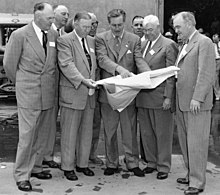
 Walt Disney (center) showing Orange County officials plans for Disneyland's layout in December 1954The concept for Disneyland began when Walt Disney was visiting Griffith Park in Los Angeles with his daughters Diane and Sharon. While watching them ride the merry-go-round, he came up with the idea of a place where adults and their children could go and have fun together. His dream lay dormant for many years.[3] Walt Disney also may have been influenced by his father's memories of the World's Columbian Exposition of 1893 in Chicago (his father worked at the Exposition). The Midway Plaisance there included a set of attractions representing various countries from around the world and others representing various periods of man; it also included many rides including the first Ferris wheel, a "sky" ride, a passenger train that circled the perimeter, and a Wild West Show. Another likely influence was Benton Harbor, Michigan's nationally famous House of David's Eden Springs Park. Walt Disney visited the park and ultimately bought one of the older miniature trains originally used there; the colony had the largest miniature railway setup in the world at the time.
While many people wrote letters to Walt Disney about visiting the Disney Studio, he realized that a functional movie studio had little to offer to the visiting fans. This began to foster ideas of building a site near his Burbank studios for tourists to visit. His ideas then evolved to a small play park with a boat ride and other themed areas. Disney's initial concept, his "Mickey Mouse Park", started with an 8-acre (3.2 ha) plot across Riverside Drive. Disney started to visit other parks for inspiration and ideas, including Tivoli Gardens in Denmark, Efteling in The Netherlands and Greenfield Village, Playland, and Children's Fairyland in the USA. He started his designers working on concepts, but these would grow into a project much larger than could be contained in 8 acres (3.2 ha).[
Disney hired a consultant, Harrison Price from Stanford Research Institute, to gauge the proper area to locate the theme park based on the area's potential growth. With the report from Price, Disney acquired 160 acres (65 ha) of orange groves and walnut trees in Anaheim, southeast of Los Angeles in neighboring Orange County.
Difficulties in obtaining funding prompted Disney to investigate new methods of fundraising. He decided to use television, and created a show named Disneyland which was broadcast on the then-fledgling ABC television network. In return, the network agreed to help finance the new park. For the first five years of its operation, Disneyland was owned by Disneyland, Inc., which was jointly owned by Walt Disney Productions, Walt Disney, Western Publishing and ABC. In addition, Disney rented out many of the shops on Main Street, U.S.A. to outside companies. By 1960 Walt Disney Productions completely bought out ABC's, Western Publishing and Walt Disney's shares.
Construction began on July 16, 1954 and cost $17 million to complete. The park was opened one year and one day later. U.S. Route 101 (later Interstate 5) was under construction at the same time just to the north of the site; in preparation for the traffic Disneyland was expected to bring, two more lanes were added to the freeway before the park was finished.
 An aerial view of Disneyland in 1956. The entire route of the Disneyland Railroad is clearly visible as it encircles the park.Disneyland Park was opened to the public on July 18, 1955 with only 20 attractions. A special "International Press Preview" event was held on Sunday, July 17, 1955, which was only open to invited guests and the media. The Special Sunday events, including the dedication, were televised nationwide and anchored by three of Walt Disney's friends from Hollywood: Art Linkletter, Bob Cummings, and Ronald Reagan. ABC broadcast the event live on its network.
The event did not go smoothly. The park was overcrowded as the by-invitation-only affair was plagued with counterfeit tickets. Only 11,000 people were expected to show up, but a staggering 28,154 was the eventual population. Movie stars and other famous figures scheduled to come every two hours showed up all at once. All major roads nearby were empty. The temperature was an unusually high 101 °F (38 °C), and a plumbers' strike left many of the park's drinking fountains dry. Disney was given a choice of having working fountains or running toilets and he chose the latter.
This generated negative publicity since Pepsi sponsored the park's opening; disappointed guests believed the inoperable fountains were a cynical way to sell soda. The asphalt that had been poured just that morning was so soft that ladies' high-heeled shoes sank into it. Vendors ran out of food. A gas leak in Fantasyland caused Adventureland, Frontierland, and Fantasyland to close for the afternoon. Some parents were seen throwing their children over the shoulders of crowds to get them onto rides such as the King Arthur Carrousel.
The park got such bad press for the "International Press Preview" that Walt Disney invited attendees back for a private "second day" to experience Disneyland properly. In later years Disney and his 1955 executives referred to July 17, 1955 as "Black Sunday". Today, cast members wear pin badges on July 17 in celebration of the park's anniversary, stating how many years it has been since the 1955 opening. But for the first decade or so, Disney officially stated that opening day was on July 18, 1955 and celebrated the 18th as its Anniversary. For example, a 1967 Disneyland press release referred to July 17, 1955, as "Dedication Day" and not "Opening Day."
On Opening Day, Monday July 18, crowds started to gather in line as early as 2 a.m., and the first person to buy a ticket and enter the park was David MacPherson with admission ticket number 2, as Roy O. Disney arranged to pre-purchase ticket number 1 from Curtis Lineberry, the manager of admissions. Walt Disney had an official photo taken with two children, Christine Vess Watkins (age 5) and Michael Schwartner (7); the photo of the three carries an inaccurate caption identifying the children as the first two guests of Disneyland. Watkins and Schwartner both received lifetime passes to Disneyland that day, and MacPherson was awarded one shortly thereafter, which was later expanded to every single Disney-owned park in the world. Approximately 50,000 guests attended the Monday Opening day.
There was some controversy about the lack of African American employees at the park. Since 1963, civil rights activists were pressuring Disneyland to start hiring black people. The Disneyland executives said they would "consider" their requests. Despite a lack of Black employees, Disneyland had hired people of Asian descent like Ty Wong and Bob Kuwahara.
 Downtown DisneyThe park's management team during the mid-1990s was a source of controversy among Disneyland fans and employees. In an effort to boost profits, various changes began by then-executives Cynthia Harriss and Paul Pressler. While their actions provided a short-term increase in shareholder returns, they drew widespread criticism from employees and guests alike for the lack of foresight. With the retail background of Harriss and Pressler, Disneyland's focus gradually shifted from attractions to merchandising. Outside consultants McKinsey & Company were also brought in to help streamline operations, which resulted in many changes and cutbacks. After nearly a decade of deferred maintenance, Walt Disney's original theme park was showing visible signs of neglect. Fans of the park decried the perceived decline in customer value and park quality and rallied for the dismissal of the management team.
Concept and construction

While many people wrote letters to Walt Disney about visiting the Disney Studio, he realized that a functional movie studio had little to offer to the visiting fans. This began to foster ideas of building a site near his Burbank studios for tourists to visit. His ideas then evolved to a small play park with a boat ride and other themed areas. Disney's initial concept, his "Mickey Mouse Park", started with an 8-acre (3.2 ha) plot across Riverside Drive. Disney started to visit other parks for inspiration and ideas, including Tivoli Gardens in Denmark, Efteling in The Netherlands and Greenfield Village, Playland, and Children's Fairyland in the USA. He started his designers working on concepts, but these would grow into a project much larger than could be contained in 8 acres (3.2 ha).[
Disney hired a consultant, Harrison Price from Stanford Research Institute, to gauge the proper area to locate the theme park based on the area's potential growth. With the report from Price, Disney acquired 160 acres (65 ha) of orange groves and walnut trees in Anaheim, southeast of Los Angeles in neighboring Orange County.
Difficulties in obtaining funding prompted Disney to investigate new methods of fundraising. He decided to use television, and created a show named Disneyland which was broadcast on the then-fledgling ABC television network. In return, the network agreed to help finance the new park. For the first five years of its operation, Disneyland was owned by Disneyland, Inc., which was jointly owned by Walt Disney Productions, Walt Disney, Western Publishing and ABC. In addition, Disney rented out many of the shops on Main Street, U.S.A. to outside companies. By 1960 Walt Disney Productions completely bought out ABC's, Western Publishing and Walt Disney's shares.

Construction began on July 16, 1954 and cost $17 million to complete. The park was opened one year and one day later. U.S. Route 101 (later Interstate 5) was under construction at the same time just to the north of the site; in preparation for the traffic Disneyland was expected to bring, two more lanes were added to the freeway before the park was finished.
July 1955: Dedication Day and Opening Day

The event did not go smoothly. The park was overcrowded as the by-invitation-only affair was plagued with counterfeit tickets. Only 11,000 people were expected to show up, but a staggering 28,154 was the eventual population. Movie stars and other famous figures scheduled to come every two hours showed up all at once. All major roads nearby were empty. The temperature was an unusually high 101 °F (38 °C), and a plumbers' strike left many of the park's drinking fountains dry. Disney was given a choice of having working fountains or running toilets and he chose the latter.
This generated negative publicity since Pepsi sponsored the park's opening; disappointed guests believed the inoperable fountains were a cynical way to sell soda. The asphalt that had been poured just that morning was so soft that ladies' high-heeled shoes sank into it. Vendors ran out of food. A gas leak in Fantasyland caused Adventureland, Frontierland, and Fantasyland to close for the afternoon. Some parents were seen throwing their children over the shoulders of crowds to get them onto rides such as the King Arthur Carrousel.
The park got such bad press for the "International Press Preview" that Walt Disney invited attendees back for a private "second day" to experience Disneyland properly. In later years Disney and his 1955 executives referred to July 17, 1955 as "Black Sunday". Today, cast members wear pin badges on July 17 in celebration of the park's anniversary, stating how many years it has been since the 1955 opening. But for the first decade or so, Disney officially stated that opening day was on July 18, 1955 and celebrated the 18th as its Anniversary. For example, a 1967 Disneyland press release referred to July 17, 1955, as "Dedication Day" and not "Opening Day."
On Opening Day, Monday July 18, crowds started to gather in line as early as 2 a.m., and the first person to buy a ticket and enter the park was David MacPherson with admission ticket number 2, as Roy O. Disney arranged to pre-purchase ticket number 1 from Curtis Lineberry, the manager of admissions. Walt Disney had an official photo taken with two children, Christine Vess Watkins (age 5) and Michael Schwartner (7); the photo of the three carries an inaccurate caption identifying the children as the first two guests of Disneyland. Watkins and Schwartner both received lifetime passes to Disneyland that day, and MacPherson was awarded one shortly thereafter, which was later expanded to every single Disney-owned park in the world. Approximately 50,000 guests attended the Monday Opening day.
The early years
In September 1959, Soviet Premier Nikita Khrushchev spent thirteen days in the United States. On his visit Khrushchev had two requests: to visit Disneyland and to meet John Wayne, Hollywood's top box-office draw. Due to the Cold War tension and security concerns, he was famously denied an excursion to Disneyland. The Shah of Iran and Empress Farah were invited to Disneyland by Walt Disney in early 1960s. The video of the Shah and Disney riding the Matterhorn roller coaster is available on YouTube.There was some controversy about the lack of African American employees at the park. Since 1963, civil rights activists were pressuring Disneyland to start hiring black people. The Disneyland executives said they would "consider" their requests. Despite a lack of Black employees, Disneyland had hired people of Asian descent like Ty Wong and Bob Kuwahara.
1990s transition: Park becomes Resort
In the late 1990s, work began to expand on the one-park, one-hotel property. Disneyland Park, the Disneyland Hotel and the site of the original parking lot as well as acquired surrounding properties were earmarked to become part of a greater vacation resort development. The new components of this resort were to be another theme park, Disney California Adventure Park; a shopping, dining and entertainment complex, Downtown Disney; a remodeled Disneyland Hotel; Disney's Grand Californian Hotel & Spa; and the acquisition of the Pan Pacific Hotel (later to be remodeled and renamed Disney's Paradise Pier Hotel). Because the existing parking lot (south of Disneyland) was built upon by these projects, the six-level, 10,250-space Mickey and Friends parking structure was constructed in the northwest corner of the property. At the time of its completion in 2000, it was the largest parking structure in the United States.

HTML Comment Box is loading comments...
Langganan:
Postingan (Atom)